
While working with rug safe for pets with sensitive paws or allergies installations, I learned that the heart of the problem isn’t just the rug it’s the ecosystem it creates. You’re not just picking a floor covering; you’re choosing a landscape for your pet’s daily life. It needs to be a place for play, rest, and zoomies without becoming a repository for irritants or a surface that causes discomfort. The goal is harmony, not compromise.

Benefits Specific to rug safe for pets with sensitive paws or allergies
Let’s cut to the chase. A truly pet-safe rug for sensitive situations isn’t a luxury; it’s a functional health and comfort item. The right choice delivers a cascade of benefits you might not have considered.
- A Cleaner Air Shed: Low-pile, tightly woven fibers don’t trap and hold dander, dust, and pollen the way deep shags do. This directly reduces airborne allergens circulating in your home.
- Paw-Soothing Texture: Imagine walking on a surface that’s neither irritatingly scratchy nor treacherously slick. A good rug provides gentle traction and a soft, even feel that’s kind on tender paws, especially for older pets or those with conditions like hyperkeratosis.
- The Stress-Free Cleanup Cycle: When accidents happen (and they will), or when pollen season hits, a rug that can be thoroughly cleaned or even tossed in the wash resets the environment. This prevents the buildup of biological irritants that can trigger both pet and human allergies.
- Durability Without Harsh Chemicals: Many “stain-resistant” treatments are the enemy of sensitivity. Rugs designed with inherent stain resistance from their fiber type (like certain polyesters) offer protection without added chemical coatings that can off-gas or irritate.
I once consulted for a family with a dog allergic to dust mites and a cat with persistently sore paw pads. Their beautiful, high-pile wool rug was a symptom factory. Switching to a flat-weave, washable foundation changed everything. Less itching, more napping in sunny spots. The result? A happier ecosystem for all.
The Material Matrix: What’s Actually Underfoot?
Here’s what I mean: the fiber is fate. Your choice dictates everything about maintenance and comfort. Bigger, fluffier fibers aren’t always better. In fact, for this mission, they’re usually the villain.
| Material | Pro for Sensitive Paws/Allergies | Con to Consider |
|---|---|---|
| Polyester (High-Quality) | Often inherently stain-resistant, soft, non-shedding, typically affordable. A workhorse for washable rugs. | Can hold onto odors if not cleaned properly. Look for solution-dyed versions for best colorfastness. |
| Nylon | Extremely durable, often treated for stain resistance, cleans well. | Those stain treatments can sometimes be irritants. Seek out “green” or treatment-free options. |
| Polypropylene (Olefin) | Moisture-resistant, hypoallergenic, excellent for outdoor/indoor use where messes are frequent. | Can feel less plush underfoot. Not always the coziest for long lounging sessions. |
| Natural Fibers (Jute, Sisal) | Natural, often untreated, great texture for traction. | Can be rough on sensitive paws. Difficult to clean spills from; can harbor allergens in the weave. |
| Wool | Naturally soil-resistant, luxurious feel. | Requires professional cleaning, can shed, and some pets are allergic to lanolin. A high-maintenance friend. |
Think of it like choosing a mattress for someone with back pain and allergies. You need support (durability), a hypoallergenic cover (material), and the ability to strip it and wash it (cleanability). The plush pillow-top might look inviting, but it’s a trap for dust mites and offers no real support.
The Maintenance Mindset: It’s a System, Not a Product
And yes, I learned this the hard way early in my career. A perfect rug in a flawed cleaning routine is a temporary victory. You need a strategy.
- Robot Vacuum as First Responder: Daily or every-other-day runs with a bot equipped with a HEPA filter are non-negotiable. This is your continuous allergen removal system. An ultra-thin, low-pile rug is its perfect partner.
- The Washable Imperative: When we talk about a rug like the Vanmoos example a machine-washable 6×9 we’re talking about a total system reset. Every few months, or after a major incident, you get a -new baseline. This is revolutionary for allergy management.
- Spot Cleaning Philosophy: Use cleaners formulated for pet odors and stains that are free of dyes, perfumes, and harsh volatile organic compounds (VOCs). Your nose isn’t the best judge; your pet’s respiratory system is.
Busting the “Natural is Always Better” Myth
This is the contrarian point that ruffles feathers. Natural fibers like wool or jute are often marketed as the pinnacle of healthy living. For a pet with sensitivities, they can be a minefield. Wool can hold moisture (think accident residue), often requires chemical cleanings, and its natural lanolin can be an allergen itself. Sisal is glorified sandpaper for delicate paws. A high-performance synthetic, designed for cleanability and softness, is frequently the more genuinely “healthy” choice in a real, messy, living-with-pets home. It’s about engineered solutions, not just pastoral ideals.
A Case Study in Pivoting
Let’s get practical. Sarah had two greyhounds with famously thin skin and sensitive paws. Her gorgeous vintage oriental rug was a tapestry of problems: loops their nails caught on, deep pile that irritated their skin, and impossible cleaning after the occasional “nervous tummy” episode. She saw the rug as a centerpiece. I urged her to see it as a functional surface. We pivoted.
We chose a large, soft, low-pile rug with a non-slip backing. The tight weave prevented nail snags. The flat surface was cooler and less irritating. And when one dog had a medication-related accident, she rolled it up, washed it, and had it back down by evening. The aesthetic changed from “formal traditional” to “modern farmhouse cozy,” but the functional win was absolute. Her comment? “I didn’t realize how much anxiety that old rug was causing all of us until it was gone.”
Actionable Recommendations for Your Space
So, where do you start? Ditch the overwhelm. Follow this framework.
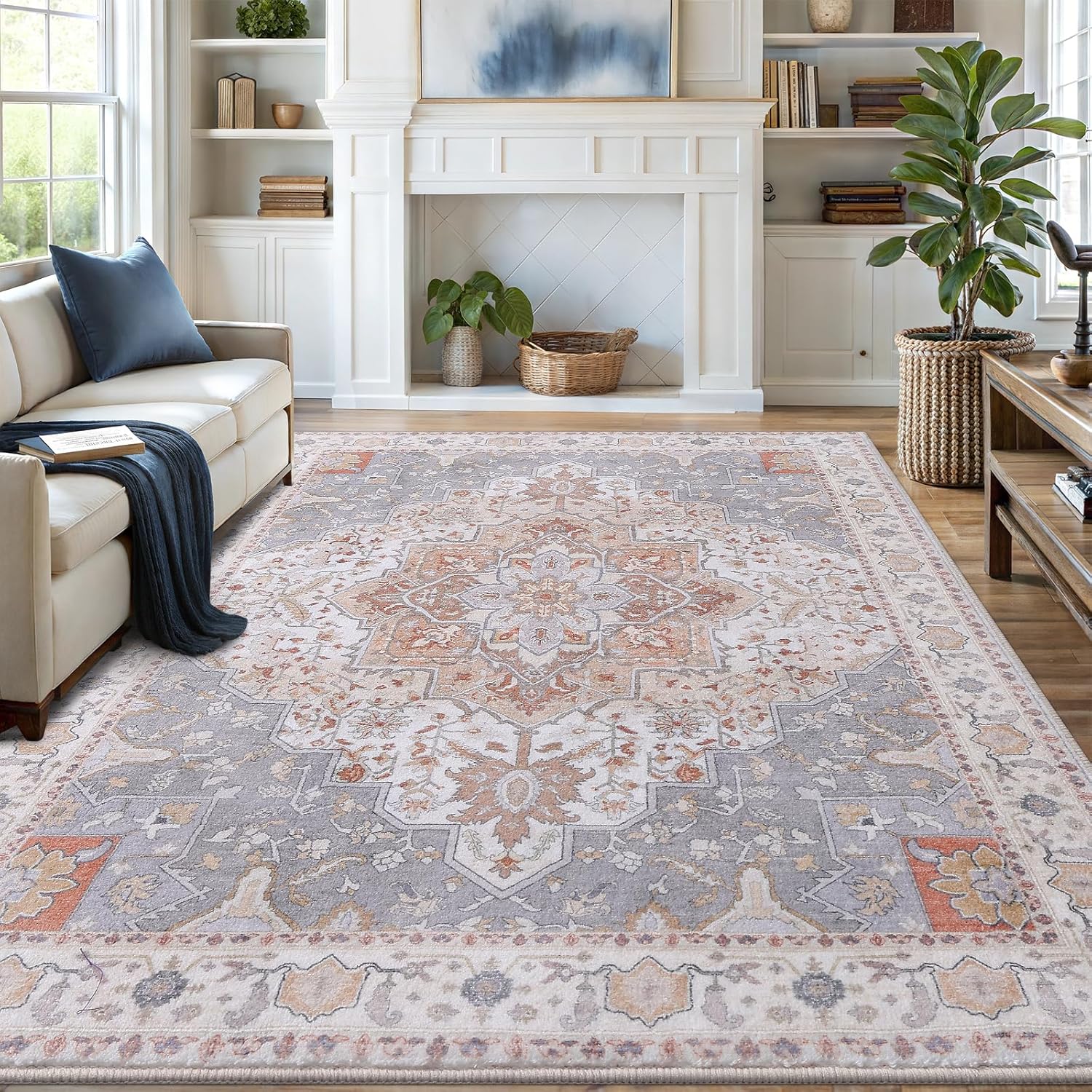
Vanmoos 6×9 Machine-Washable Area Rug — Artistic Flair / Beige
Low-pile, non-slip rug that minimizes pet hair collection and makes quick cleanup part of your routine.
Affiliate link — may earn a commission at no extra cost to you.
- Diagnose the Dominant Issue: Is it primarily allergies (dander, dust) or primarily paw sensitivity (itching, licking, tenderness)? This points you toward cleanability or texture first.
- Prioritize Pile Height: Look for “low-profile” or “flat-weave.” This is your number one filter. It solves for allergens, traction, and cleaning ease in one move.
- Interrogate the Backing: A secure, non-slip rubber backing (like TPR) is safety. It prevents the rug from becoming a slip hazard and protects your floors from scratches during play. It also means no added adhesive sprays, which can be irritants.
- Embrace the Machine-Washable Mentality: If the size of your room allows it, making this a non-negotiable changes the game. It’s the ultimate control.
- Test the Texture: If possible, order a sample. Run the back of your hand across it. Would it be gentle on a bare belly? Better yet, let your pet inspect it.
The journey to a pet-safe space is iterative. You might not get it perfect on the first try. But by focusing on the ecosystem material, maintenance, and mindset you’ll find a foundation where both your design dreams and your pet’s well-being can comfortably coexist. Start with the most problematic room. See the difference. Then expand your territory, one safe, soft, washable square foot at a time.
⚡ Grab This Deal While It Lasts
👉 Check the Latest Price on Amazon 👈
⭐️ Trusted by 1,000+ Customers Worldwide