
While working with how to remove creases from new area rugs safely installations, I learned that this seemingly simple task can quickly become a frustrating puzzle. The wrinkle or fold marks that come with new rugs are stubborn, and rushing to fix them often causes more harm than good. You want your rug to lie flat, look great, and last long without risking damage from improper techniques. So how do you tackle this problem without making it worse? let’s break down the challenges and explore practical, user-friendly solutions.

Essential Considerations for how to remove creases from new area rugs safely
First off, why do rugs crease in the first place? Most new area rugs arrive rolled tightly or folded, which compresses the fibers and causes permanent bends. The material type, rug thickness, and backing all influence how easily these creases relax. For example, synthetic rugs behave differently from natural fiber ones. And yes, I learned this the hard way when I tried a high-heat method on a delicate wool rug disaster.
Your biggest concern is how to smooth out those creases without damaging the rug s surface, backing, or color. Heat, moisture, and pressure all play roles, but each comes with risks. The goal is to find a balance that safely encourages the fibers to relax and lie flat.
Common Problems Users Face Removing Rug Creases
- Persistent folds that refuse to flatten even after days of lying flat.
- Damage to fibers or backing caused by excessive heat or moisture.
- Slippage or curling edges after attempts to fix creases.
- Unwanted odors from dampening methods gone wrong.
- Time-consuming processes that disrupt your room setup.
Given these challenges, it’s clear there’s no one-size-fits-all fix. Your approach depends on the rug s material, size, and the crease severity. let’s look at some of the most common strategies and their pros and cons.
Heat and Pressure: The Classic Approach
Applying heat combined with weight is a popular method. The idea: warmth softens fibers, and pressure encourages them to stay flat. People often use:
- A warm iron with a cloth barrier
- Heavy furniture placed strategically
- Steam from a handheld steamer or iron
Here’s what I mean: you can gently steam the crease area, then place a flat object or heavy book on top. But caution is key. Too much heat or direct contact with an iron can melt synthetic fibers or discolor natural ones. And too much moisture may cause mold or a musty smell if the rug doesn’t dry properly.
Roll It Backwards: Counter-Rolling Technique
This method involves rolling the rug tightly in the opposite direction of the crease and securing it for a day or two. The counter-pressure helps coax fibers to realign. it’s low-risk and chemical-free.
The result? Often a significant reduction in crease visibility without any heat or moisture. But it takes patience. For thick or heavily creased rugs, it might not fully solve the problem.
Weight and Time: Let Gravity Do Its Work
Sometimes the simplest solution is to unroll the rug and let it sit flat under a few heavy objects, like furniture or books, for several days. This approach is gentle and safe for all rug types.
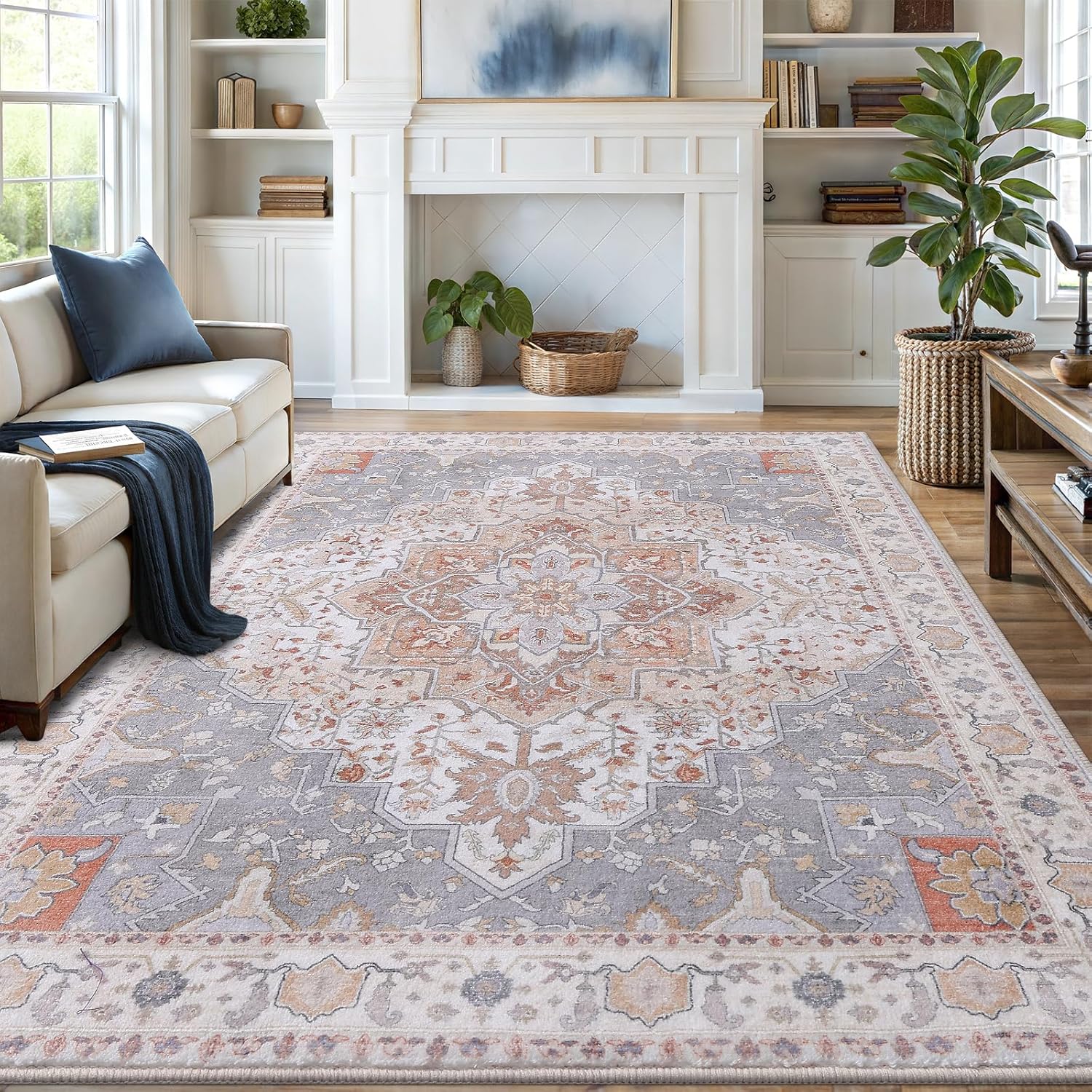
Vanmoos 6×9 Machine-Washable Area Rug — Artistic Flair / Beige
Low-pile, non-slip rug that minimizes pet hair collection and makes quick cleanup part of your routine.
Affiliate link — may earn a commission at no extra cost to you.
Con? It demands time. You might have to wait a week or more for stubborn creases to fade. Also, if the rug is placed in a high-traffic area too soon, the creases can reform.
Using Rug Pads and Non-Slip Backings
Adding a quality rug pad or selecting a rug with a non-slip backing can help keep the rug flat and reduce crease formation over time. For example, some machine-washable rugs with TPR rubber backing (like the Vanmoos 6×9 Area Rug) naturally resist curling and shifting, making crease issues less persistent.
Think of it as how a good shoe sole supports your foot the right backing supports the rug s shape.
Comparing Popular Methods for Removing Rug Creases Safely
| Method | Pros | Cons | Best For |
|---|---|---|---|
| Heat + Pressure (Iron/Steamer) | Fast results; effective on many fibers | Risk of damage; requires skill; moisture risk | Durable synthetic or wool rugs with caution |
| Counter-Rolling | Safe; no heat or moisture; low cost | Time-consuming; less effective on deep creases | Most rug types; delicate fibers |
| Weight + Time | Gentle; no special tools needed | Slow; requires space and patience | All rugs; especially delicate or handmade |
| Rug Pads / Non-Slip Backing | Prevents crease formation; adds comfort | Does not remove existing creases directly | Long-term maintenance; high-traffic areas |
Myth Busting: Bigger doesn’t Always Mean Better
Some believe that larger rugs crease more and are harder to fix. Not necessarily. The key is how the rug is stored and shipped. A tightly rolled 6×9 rug with quality fibers and backing (like the Vanmoos example) may crease less than a smaller, cheaper rug folded multiple times.
So size alone isn’t the villain. it’s the handling before it reaches your floor.
Real User Scenario: The Case of the Stubborn Crease
“I bought a new low-pile area rug for my living room. After unrolling, a deep crease near the center refused to flatten after a week. I tried placing heavy books on it overnight, but it barely improved. Next, I cautiously used a handheld steamer with a towel barrier, then weighted it again. The crease softened significantly after two days. Lesson learned: patience combined with gentle heat does the trick, but rushing or direct heat could have ruined it.”
This story highlights the importance of combining methods and respecting your rug s material. And yes, I learned this the hard way too.
Tools and Tips Worth Trying
- Handheld Steamer: Provides controlled steam without direct contact.
- Heavy Books or Furniture: Use flat, evenly weighted objects to avoid new dents.
- Rug Pad: Adds grip, prevents shifting, and reduces crease recurrence.
- Counter-Rolling Strap or Tape: Keeps the rug securely rolled in the opposite direction.
- Vacuum with Brush Attachment: Regular vacuuming can help fibers relax.
Unexpected Analogy: Think of Your Rug Like a Freshly Ironed Shirt
Just as a shirt develops creases when folded or crumpled, your rug behaves similarly. But unlike a shirt, you can’t just toss it in the dryer or iron it directly without care. The fabric type and construction dictate what methods are safe. And just as you d use a pressing cloth for your shirt, the same goes for your rug when applying heat.
Actionable Recommendations for Removing Creases Safely
- Identify your rug s material and backing type before choosing a method.
- Start with the least invasive approach: unroll and let it rest flat with weights.
- Try counter-rolling for stubborn creases, especially on delicate rugs.
- Use steam cautiously with a protective cloth barrier to avoid direct heat damage.
- Invest in quality rug pads to prevent future creasing and slipping.
- Be patient: Some creases fade over weeks, not hours.
- For machine-washable rugs like the Vanmoos 6×9, regular washing can help fibers regain their shape, but follow care instructions closely.
Removing creases from new area rugs safely isn’t always glamorous, but with the right approach, you can protect your investment and enjoy a smooth, beautiful floor covering. Remember: patience and respect for your rug s unique characteristics will always pay off.
🏆 Unlock Today’s Offer →
👉 Check the Latest Price on Amazon 👈
⭐️ Trusted by 1,000+ Customers Worldwide