
The reality of dealing with how to pick rugs that suit open floor concepts is often misunderstood. it’s not just about finding a pretty pattern. you’re trying to solve a spatial puzzle, create invisible walls, and somehow make a cavernous room feel both cohesive and comfortably subdivided. All without actually building anything. it’s interior design s version of a magic trick.
here’s the core challenge: your beautiful, airy, open-plan space can easily turn into a bland, furniture-floating wasteland. The rug is your primary tool to fight that. Think of it less as a floor covering and more as a visual anchor. A territory marker. It tells your sofa, chairs, and coffee table, “You belong together,” and politely informs the dining set to stay in its own lane.
I once helped a friend whose “great room” looked like a furniture showroom after a mild earthquake. Everything was the right style, but nothing connected. We swapped one too-small rug for two strategically sized ones, and the result? Instant definition. The room finally made sense.

Key Features That Address how to pick rugs that suit open floor concepts Needs
When you’re evaluating a rug for this specific battlefield, you’re not just judging color. You’re assessing its logistical specs for a multi-function zone. Let’s break down the critical needs and how the right rug features solve them.
The Size Scandal: Why Bigger is (Almost) Always Better
The number one mistake? Choosing a rug that’s too small. In an open concept, a postage-stamp rug under just the coffee table creates visual chaos. it’s like putting a tiny hat on a large dog it highlights the problem. You need scale to command the space.
- The Living Zone Rule: All key furniture legs should be on the rug. At a minimum, the front legs of sofas and chairs. This “grounds” the grouping.
- The Dining Zone Rule: The rug must extend at least 24 inches beyond the table on all sides. This keeps chairs from catching when people scoot in and out. (And yes, I learned this the hard way with a rug that was exactly table-width. Chaos at every meal.)
- The Walkway Mandate: Leave a consistent border of bare floor (18-24 inches is ideal) around the perimeter of each zone. This creates a visual “frame” and a natural pathway between areas.
here’s what I mean: A product like the Vanmoos 6×9 rug becomes a contender not because of its beige color first, but because 6×9 is a versatile, medium-large size that can adequately anchor a defined living room conversation pit within a bigger space. it’s a tool for the job.
Material Matters: The Traffic Cop Function
Your rug material dictates flow and function. An open floor plan means cross-traffic from kitchen to living room, from entry to dining. The rug needs to handle it without becoming a tripping hazard or a dirt magnet.
| Material Type | Best For Open Concepts Because… | Watch Out For… |
|---|---|---|
| Low-Pile / Flatweave | Easy furniture movement, robot-vacuum friendly, reduces tripping, defines zones without bulky height. | Can feel less plush underfoot. |
| Medium-Pile | Comfort for living zones, good sound dampening in noisy open spaces. | May snag if dragged across, can impede chair movement in dining areas. |
| Natural Fibers (Jute, Sisal) | Great texture, defines a casual organic style, very durable. | Harder to clean spills, can be rough for kids/pets to play on. |
The contrarian point? Plush isn’t always plusher. In a high-traffic crossroads, a super-thick shag rug is a liability. it’s a tripping zone, a crumb cathedral, and it makes moving a dining chair feel like plowing a field. A slim-profile, low-pile rug often performs the zoning magic better because it’s functional first. it’s the unsung hero that works hard without demanding attention.
The Visual Strategy: Pattern, Color, and Connection
Once you’ve solved the logistics, you get to the art. The rug must visually link different areas. This is where you can get clever.
- The Color Thread: Pull one color from your kitchen cabinets, or an accent pillow from your living room, and let it appear in the rug s pattern. This creates a subtle, subconscious tie across the sightline.
- Pattern Scale: A large, sprawling pattern can help a large rug feel intentional and artistic, not just like a big beige field. But in a very busy space, a simple texture or tonal pattern might be the calm anchor you need.
- The Unexpected Analogy: Choosing rugs for an open floor plan is like placing area rugs in a video game like The Sims. you’re not just decorating; you’re using them to assign a function code to a patch of floor “this is for socializing,” “this is for eating.” The right rug makes the game engine (your brain) read the room correctly.
A rug with an “Artistic Flair” pattern, like the example mentioned, isn’t just about looks. The variation in its design can help disguise the inevitable high-traffic wear in a central pathway, and its beige tones act as a neutral connector, allowing bolder colors in your furniture to pop without clashing.
The Maintenance Mindset for a Multi-Use World
let’s be honest: an open concept has no doors to hide mess. Your rug is in the line of fire from the kitchen, the entryway, the kids, the pets. Its cleanability is a non-negotiable feature, not an afterthought.
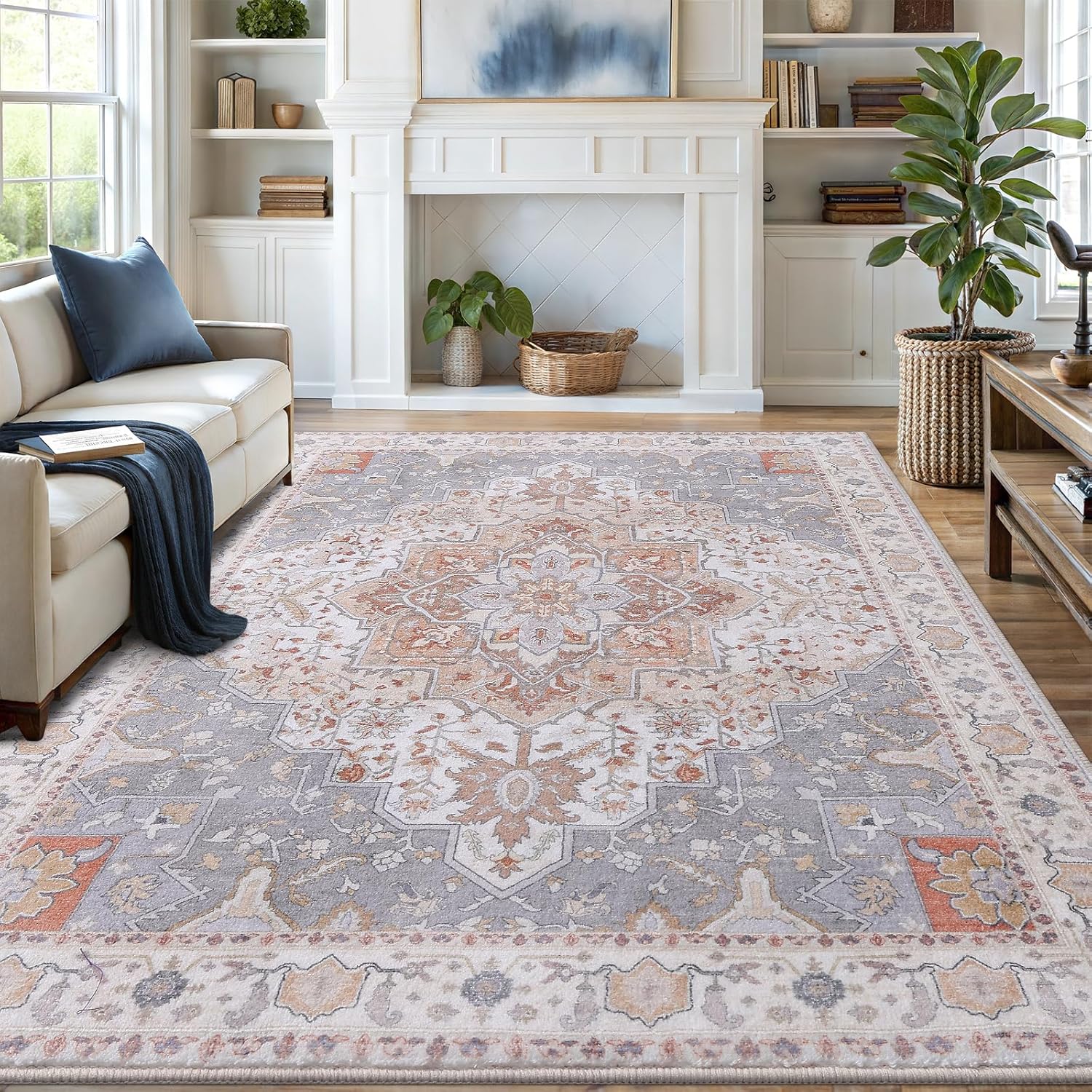
Vanmoos 6×9 Machine-Washable Area Rug — Artistic Flair / Beige
Low-pile, non-slip rug that minimizes pet hair collection and makes quick cleanup part of your routine.
Affiliate link — may earn a commission at no extra cost to you.
Features like being machine-washable or highly stain-resistant transition from marketing bullets to critical survival traits. When your living, dining, and cooking areas are one visual field, a prominent stain on the rug isn’t just a spot; it’s a focal point. You need a rug that supports your real life. A non-slip backing isn’t just about safety; it’s about preserving your careful zoning a rug that creeps is a zone that’s collapsing.
Actionable Recommendations: Your Zoning Playbook
So, how do you actually start? Forget shopping for a “rug.” You’re sourcing a zoning device.
- Map It Out First: Use painter’s tape on your floor to outline potential rug sizes for each zone. Live with the tape for a day. Walk the pathways. it’s the cheapest, most revealing experiment you can do.
- Prioritize Function per Zone: Dining area? Go flat, durable, and easy-clean. Living area? Softer underfoot is okay. High-walkway? Slim and non-slip is king.
- Connect, Don’t Match: Rugs in the same open space shouldn’t be identical (that’s too matchy-matchy), but they should speak the same language through a shared color, texture, or style vibe.
- Embrace the Layer: Sometimes one perfect giant rug isn’t feasible. it’s okay to use multiple rugs to define adjacent zones. Just ensure they relate visually and are sized correctly for their specific task.
The result? A space that feels intentionally designed, comfortably lived-in, and functionally brilliant. you’ll have created rooms without walls, guided traffic, and tied your decor together all from the floor up. that’s the real magic of solving the open concept rug puzzle.
🏆 Unlock Today’s Offer →
👉 Check the Latest Price on Amazon 👈
⭐️ Trusted by 1,000+ Customers Worldwide