
While working with buy non slip 6×9 area rug for hardwood floors installations, I learned that the core issue is rarely about the rug itself. It’s about solving a system problem: integrating a soft, decorative layer onto a hard, slick surface without compromising safety or floor integrity. Homeowners face a triad of concerns preventing slips, protecting expensive hardwood, and achieving a look that lasts. Ignoring any one element leads to failure.

Why This Solution Works for buy non slip 6×9 area rug for hardwood floors
The optimal solution addresses multiple failure points simultaneously. It’s not a single product but a framework of criteria. For instance, a rug like the Vanmoos example embodies this by combining a TPR rubber backing for grip with a low-pile, machine-washable construction. This tackles the primary user headaches: rugs that migrate like unwanted guests, floors that get scratched, and cleaning routines that become ordeals. Here’s what I mean: a non-slip backing alone is futile if the rug material traps pet hair and requires professional cleaning every month. The solution works because it’s holistic.
I once consulted on a living room where a beautiful antique rug ruined a newly refinished oak floor. The owner used a cheap, vinyl-backed pad that chemically bonded to the polyurethane finish. The repair bill was staggering. The lesson? The interface between rug and floor is a critical, often neglected, engineering zone.
Deconstructing the Slippery Slope: Core Challenges
Let’s name the enemies. First, physics. Hardwood offers minimal friction. Add foot traffic, pet zoomies, or a child’s sprint, and a rug becomes a sled. Second, preservation. Abrasive rug undersides or shifting mats act like sandpaper. Third, practicality. A 6×9 rug that won’t fit under doors, humps up, or demands dry-cleaning is a liability.
- The Drifter: A rug that creeps inches every day, creating a tripping hazard and exposing unprotected floor.
- The Scarifier: Backings that discolor or etch hardwood finishes, or pile that grinds in dirt.
- The High-Maintenance Tenant: Rugs that stain instantly, shed incessantly, or require steam cleaning you can’t DIY.
- The Ill-Fitted Suit: A rug too thick for door clearance, or a size that disrupts room flow, forcing furniture onto the hardwood rim.
A Material World: Beyond Aesthetic Choice
Your rug material dictates its behavior. Think of it like tire selection for your car. All-season? Performance? For hardwood floors, you need the “all-weather” of rugs.
| Material | Pros for Hardwood | Cons for Hardwood | Best For |
|---|---|---|---|
| Polyester (e.g., Vanmoos) | Stain-resistant, often low-shed, soft, typically affordable. Many feature integrated non-slip backs. | Can be less durable than natural fibers over decades. Some can show compression marks. | Busy households, pets, kids, areas needing frequent washing. |
| Wool | Naturally resilient, durable, excellent feel. Often uses high-quality pads. | Expensive, can shed, requires professional cleaning for spills. Prone to moth damage if not treated. | Low-traffic formal spaces where longevity is key. |
| Polypropylene (Olefin) | Highly stain-resistant, moisture-proof, very durable. Good for high moisture areas. | Can feel less plush, may be prone to fading in direct sun. | Entryways, dining rooms, basements. |
| Cotton/Jute | Natural, breathable, often machine-washable (cotton). | Jute can be rough and shed. Cotton flattens quickly. Both often require separate pads. | Casual, layered looks. Low-impact areas. |
The contrarian point? Bigger doesn’t always mean better. A thicker, plusher rug feels amazing but can be a nightmare to stabilize. A slim-profile rug, like many modern machine-washable versions, often couples better with hardwood by lowering the center of gravity and easing furniture placement.
The Anchor System: Non-Slip Backings and Pads
This is your rug’s foundation. There are two main approaches: integrated backing or a separate pad.
- Integrated Backing (TPR, PVC, Latex): As seen on the Vanmoos rug. A layer fused to the rug. Pros: Convenient, low-profile, often washable. Cons: Can degrade with repeated washing; grip level is fixed.
- Separate Rug Pad: A dedicated layer placed under the rug. Pros: Superior cushioning and grip, extra floor protection, extends rug life. Cons: Adds cost and height; must be sized correctly.
For hardwood, always choose pads labeled “non-slip” and “hardwood floor safe.” Avoid rubber-backed or vinyl pads that can leach chemicals or adhesives. Look for felt-rubber composites or natural rubber options. The result? A rug that stays put and a floor that stays pristine.
The 6×9 Sweet Spot: A Size Analysis
Why 6×9? It’s the Swiss Army knife of rug sizes. It defines spaces in standard living rooms under sofas, anchors dining sets for eight, and fills master bedrooms. But the fit must be precise. An unexpected analogy: placing a 6×9 rug is like docking a spacecraft. You need clearance (under doors), alignment (with furniture), and a secure seal (to the floor) to prevent mishaps. A rug with a slim profile, as noted in many contemporary designs, solves the clearance issue outright.
A Brief Case Study: The Transformative Fix
Consider a client a young family with two dogs and engineered hardwood. Their previous rug was a high-pile wool number that slid constantly, collected hair, and required annual professional cleaning. After one too many toddler tumbles, they sought a change. We focused on the system: a low-pile, stain-resistant material (synthetic) with a reliable non-slip backing. They chose a machine-washable 6×9 beige pattern to hide dirt and coordinate with their farmhouse decor. The transformation was immediate. The rug stayed in place. Cleaning became a monthly machine wash cycle. The floor was protected. And yes, the dogs approved. The key was abandoning the singular “look-first” mindset for a balanced performance-first approach.
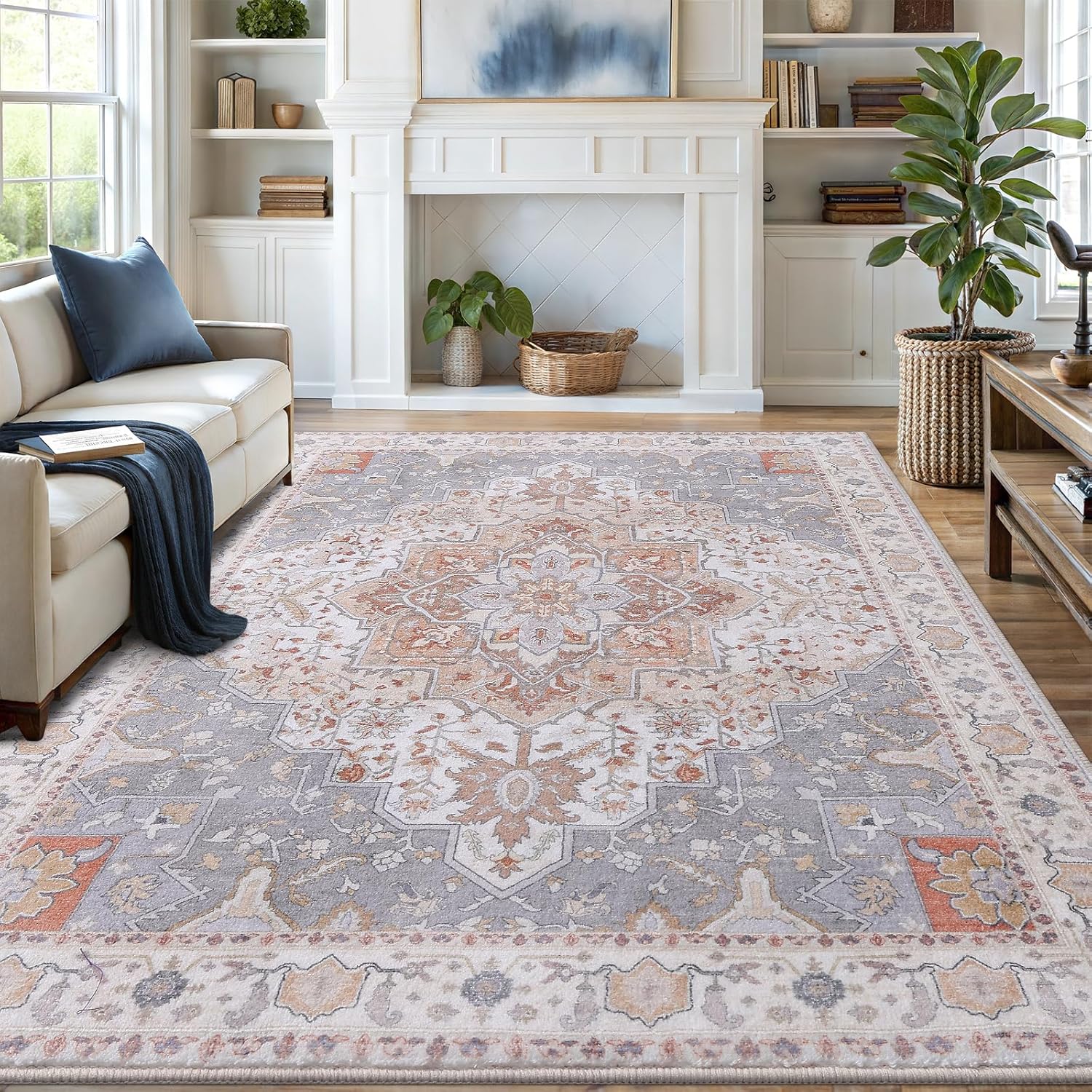
Vanmoos 6×9 Machine-Washable Area Rug — Artistic Flair / Beige
Low-pile, non-slip rug that minimizes pet hair collection and makes quick cleanup part of your routine.
Affiliate link — may earn a commission at no extra cost to you.
Actionable Recommendations for a Secure Installation
Here is your framework for success. Follow these steps to solve your buy non slip 6×9 area rug for hardwood floors challenge.
- Diagnose Your Traffic: High-traffic (entryway, kitchen)? Prioritize durability and washability. Low-traffic (bedroom)? You can lean into feel and aesthetic.
- Measure Twice, Buy Once: Ensure a 6×9 works for your space. There should be 18-24 inches of bare floor between the rug and walls. Verify door clearance most standard doors need under 1/2 inch of total rug + pad height.
- Select the Material System: For most homes, a synthetic like polyester or polypropylene with a built-in non-slip back offers the best balance. If you invest in a natural fiber rug, budget for a high-quality, hardwood-safe separate pad.
- Prioritize Cleanability: Machine-washable is a game-changer in 2024. If not, ensure spot-cleaning protocols are straightforward. Your future self will thank you.
- Install with Intent: Unroll the rug and let it relax for 24 hours. If using a pad, cut it 1-2 inches smaller than the rug on all sides to prevent edges from tripping. Weight the corners with furniture initially.
- Maintain the Grip: Regularly lift and vacuum under the rug to prevent grit buildup that can act as ball bearings. For integrated backings, check periodically for wear and wash per instructions to maintain tackiness.
The journey to the perfect non-slip 6×9 rug for your hardwood floors is a mix of practical science and personal style. By focusing on the system grip, protection, cleanability, and fit you turn a household challenge into a lasting foundation for your home’s comfort and safety. Start with your biggest pain point and build your solution from there.
📈 Shop Smart, Buy Quality – Add to Cart
👉 Check the Latest Price on Amazon 👈
⭐️ Trusted by 1,000+ Customers Worldwide